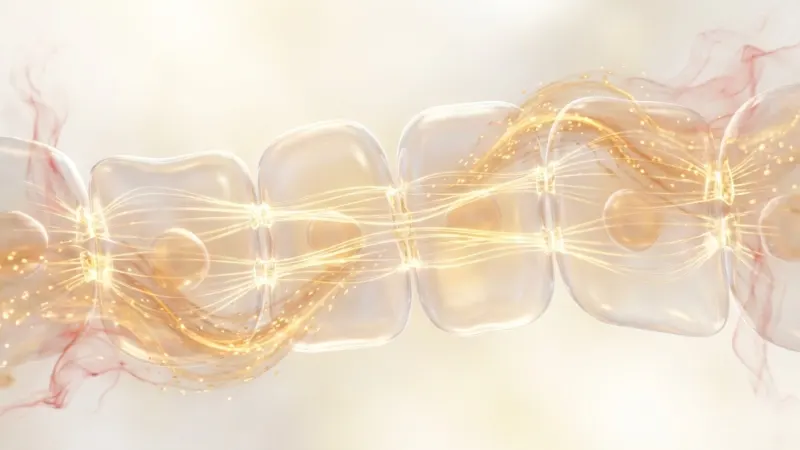
What happens to the gut when you fast, and can collagen help?
During fasting, the lining of the gut renews itself, which is part of fasting's beneficial effects. But long or repeated fasting can also strain the gut barrier, the thin layer of cells that separates the contents of the gut from the blood. When that barrier weakens, unwanted substances such as bacterial toxins can slip through and set off inflammation throughout the body. The state is popularly called "leaky gut" and, more precisely, increased gut permeability.
Collagen peptides, small pieces of protein made from collagen (the body's most common structural protein), have drawn research attention as something that might protect the gut. But what does the actual research say?
In short: Cell studies show that collagen peptides strengthen the gut's "sealing junctions" (tight junctions) and calm inflammation. An uncontrolled human trial found fewer digestive complaints, but the strongest, well-controlled trial found no clear effect. So the evidence is promising at the cell level, but still weak in humans. For people on long fasts or keto, collagen may be a possible support, but it is not definitively proven.
Cell study: collagen strengthens the gut's sealing junctions
In 2017, Chen and colleagues published a study in the journal Food & Function that looked at the effect of collagen peptides on the gut barrier. The study used Caco-2 cells, a standard model for the gut's surface cells, and mimicked inflammation with the signalling molecule TNF-α. The researchers found:
- Collagen peptides counteracted the damage to the barrier that the inflammation caused. The smallest peptide pieces worked best.
- The sealing junctions were preserved. Tight junctions are the proteins that bind the gut cells closely together and stop substances slipping between the cells. Inflammation normally breaks them down, but the collagen peptides prevented it.
- The central inflammation switch NF-κB was dampened, which points to an anti-inflammatory effect.
It is important to be clear that this is a cell study (in a test tube), not a trial in humans. Results from cells cannot be transferred directly to the body, but they give insight into the mechanisms that might lie behind a beneficial effect.
Note: the best-controlled trial (with a placebo), by contrast, found no clear effect. Dose in the studies: 10 to 20 g of hydrolysed collagen a day.
Human trial: fewer digestive complaints, but no control group
In 2022, Abrahams and colleagues published a two-phase trial in JMIR Formative Research. First, 40 healthy women who were overweight took 20 grams of collagen peptides daily for eight weeks. Only 14 of the 40 (35 percent) completed the full course, partly because of disruption during the COVID-19 pandemic, and it is these 14 that the numbers are based on. Then some of them were interviewed about their experience. The measured results showed less bloating (about a third) and slightly less constipation, and the total sum of complaints fell. The interviews pointed the same way, with better digestive comfort.
But the trial had an important weakness: there was no placebo group, and the participants knew they were getting collagen. That in itself can have affected the self-reported results (an expectation effect).
The best-controlled trial found no clear effect
A randomized, controlled trial from 2023 in European Journal of Nutrition (where the 20 participants, 16 of them men, got both collagen and a placebo in random order, a crossover design, and neither they nor the researchers knew which was which at the time) looked at the effect of collagen peptides on gut stress during hard exercise. Here the finding was more sober: there was no reliable difference between collagen and placebo, in either inflammation markers or self-reported gut symptoms. The exercise raised the marker LPS (a substance from bacterial cell walls that suggests something has slipped through the gut barrier), but collagen did not reliably change it.
That is a useful counterweight to the more positive findings. A well-controlled trial did not find a clear protective effect of collagen, and it reminds us that the promising cell and questionnaire results have not yet been confirmed in strong trials.
Why is collagen relevant for fasting and keto?
Collagen is especially interesting for people who fast or eat keto, for several reasons:
- Glycine. Collagen is the richest source in the diet of the amino acid glycine, which is part of the body's most important antioxidant (glutathione) and has anti-inflammatory properties.
- Glutamine. Collagen peptides contain glutamine, which is the preferred energy source for the gut's surface cells. During fasting, glutamine falls, and a supplement may support the gut's repair.
- Few carbs. Collagen powder is pure protein with no carbohydrate and so fits keto.
- Fasting. Collagen is a protein and will technically break a strict fast, but only minimally. It is best to take it in your eating windows, not in the middle of the fast.
Practical guidance: dose and forms
Hydrolysed collagen (collagen peptides)
Hydrolysed collagen is collagen broken down into small peptides for better absorption. It is the most studied form.
- Dose: 10 to 20 grams a day. The human trials used 10 to 20 grams. If you have kidney disease, talk to your doctor first.
- Timing: take it with a meal in your eating window, not during a fast.
- Sources: from beef, fish or chicken. The cell study used collagen from fish skin but did not compare sources.
Collagen-rich broth
Home-made bone or meat broth is a natural source of collagen and gelatine, and also contains minerals such as calcium, magnesium and phosphorus. A cup or two a day is a practical way to get more collagen.
Limits of the research
It is worth being honest about how strong the evidence is:
- The strongest mechanistic study (Chen and colleagues) is a cell study, not a trial in humans.
- The positive human trial (Abrahams and colleagues) lacked a placebo group.
- The best-controlled trial found no clear effect.
- There are still no large, well-designed trials that specifically look at collagen and gut health during fasting.
In brief
Cell studies show that collagen peptides protect the gut's sealing junctions against inflammatory damage, and an uncontrolled trial found fewer digestive complaints, but a well-controlled trial found no clear effect. For people on fasting or keto, collagen is an interesting option, rich in glycine and glutamine and free of carbohydrate, but its beneficial effect on the gut is not yet definitively proven. If you want to try it, take 10 to 20 grams of hydrolysed collagen a day with a meal, and combine it with fibre-rich foods, which are what best support your gut flora.
Who is this for?
Collagen supplements are generally safe, but some groups should pay attention:
- People with kidney disease: a high protein intake can strain the kidneys, so talk to your doctor before raising it a lot.
- People with a fish allergy: avoid collagen from fish and shellfish, and choose beef or chicken.
- Vegetarians and vegans: collagen is only found in animal sources. The alternative is glycine-rich plant proteins such as soy, plus plenty of vitamin C, which supports the body's own production of collagen.
- Pregnant and breastfeeding women: generally safe, but choose products with quality control, since some collagen products have herbal additives that are not tested.
- People with histamine intolerance: bone broth and some collagen products contain histamine, so start with a small dose.
- People on medication: large amounts of protein can affect the absorption of, for example, levodopa, so spread the protein out over the day.
- People with an eating disorder (current or past): supplements and their timing in relation to fasting should only be changed together with your treatment provider.
- Children and adolescents: fasting and supplements like this have not been studied in children and should not be used without medical guidance.
Related Reading
The gut barrier and fasting are closely linked. Here are related articles:
- The metabolic switch: how your body shifts from glucose to ketones when you fast explains how fasting sets autophagy going, which also cleans up and renews the gut cells.
- Prolonged fasting and immune system renewal is about how fasting sets stem cells in motion, which is relevant for the renewal of the gut.
Source: Chen Q and colleagues (2017). Collagen peptides ameliorate intestinal epithelial barrier dysfunction in immunostimulatory Caco-2 cell monolayers via enhancing tight junctions. Food & Function. PubMed