For decades, type 2 diabetes was described as a chronic, progressive disease, something you learn to live with and medicate for the rest of your life. But in 2018, a large British trial challenged that assumption. Today, doctors talk openly about something that once sounded impossible: for many people, type 2 diabetes can be pushed into remission.
In 2018, Michael Lean, Roy Taylor and colleagues published a randomised controlled trial (RCT) in The Lancet, known as DiRECT, testing whether a structured weight-loss programme delivered in ordinary primary care could reverse the disease.
The question the researchers asked: Could an intensive, GP-led weight-loss programme bring type 2 diabetes into remission, normalising blood sugar completely, without any diabetes medication?
How they investigated it: The researchers recruited 49 primary care practices across Scotland and north-east England and randomly assigned them so that half offered the programme and half provided usual care. In total, 306 people aged 20 to 65 took part, all of whom had lived with type 2 diabetes for less than six years and were not taking insulin. In the programme group, all diabetes and blood-pressure medication was stopped from day one, after which participants lived on a formula diet of 825-853 calories a day for three to five months. Regular food was then gradually reintroduced, followed by structured support to keep the weight off.
What they found: After 12 months, 46% of the programme group were in remission, compared with just 4% in the control group, and they were completely off diabetes medication. The effect tracked weight loss closely: among those who lost at least 15 kg, a striking 86% achieved remission.
In short: DiRECT showed that nearly half of participants could reverse their type 2 diabetes through weight loss in ordinary primary care, and that the odds were directly tied to how much weight they lost. This article explains why remission is possible at all, how the trial was designed, what the two-year follow-up revealed, and what it means for you.
Why remission is possible at all
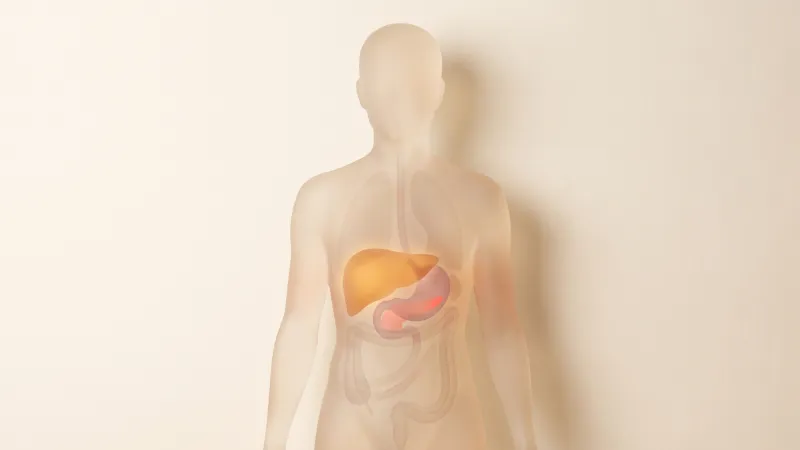
For years, type 2 diabetes was thought to travel in only one direction: steadily worse. Roy Taylor, one of the researchers behind DiRECT, proposed a different explanation, the so-called "twin cycle". The idea is that when too much fat accumulates inside the liver and the pancreas, the insulin-producing beta cells stop working properly. Blood sugar rises, not because the cells are destroyed forever, but because they are effectively "choked" by fat.
The key point is that the process can run in reverse. Lose enough weight and the fat drains out of the liver and pancreas first, and in many people, the beta cells then begin to work again. This is the entire biological basis for remission.
How the trial was designed
DiRECT was what is called a cluster-randomised trial: it was entire practices, not individual patients, that were randomly assigned to either the programme or usual care. That makes the result more robust, because it reflects how such a programme would actually work out in the real world at your local doctor's office.
Participants in the programme group followed three phases. First, three to five months on a very-low-calorie formula diet, with all diabetes medication stopped from day one. Then a two-to-eight-week transition, during which regular food was reintroduced little by little. And finally a long maintenance phase with support to hold onto the weight loss. It is worth noting that the whole process took place under medical supervision, precisely because stopping medication and eating very little requires monitoring.
The results after one year
The gap between the two groups was striking. Nearly half the programme group were in remission after one year, while it barely happened at all in the control group. And the more weight participants lost, the greater their chance: among those who lost 15 kg or more, over four in five went into remission. The programme group lost an average of 10 kg and, at the same time, reported better quality of life than the control group.
Does it last? The two-year follow-up
Weight loss is easy to achieve in the short term and hard to keep off. That is why the two-year follow-up, which the same team published in The Lancet Diabetes & Endocrinology in 2019, matters at least as much as the first year. At this point, 36% of the programme group were still in remission versus 3% in the control group. Perhaps even more telling: only 40% of the programme group were taking diabetes medication after two years, compared with 84% in the control group.
The follow-up also showed what you might fear: remission depended on how well people held onto their weight loss. Among those who maintained at least 10 kg of weight loss over the two years, nearly two in three were still in remission. Weight loss, in other words, is not a one-off effort but something that has to be maintained.
What does this mean in practice?
DiRECT proves that remission is a realistic goal for many, but not a guarantee for everyone. Three things stand out: the odds are highest when the diabetes was diagnosed recently (participants had lived with it for under six years), when the weight loss is substantial, and when it is sustained over time. The method in the trial itself was a very-low-calorie formula diet, but that is not the only route to weight loss. A low-carbohydrate diet appears able to produce similar results: in a two-year, non-randomized study from Virta Health, 17.6% of participants reached full remission of type 2 diabetes through ketosis (Athinarayanan and colleagues, Frontiers in Endocrinology, 2019). Fasting is less studied for remission, but in a small six-month randomized trial, 30% reached remission with intermittent fasting plus calorie and carbohydrate restriction and 22.5% with calorie and carbohydrate restriction alone, against 2.5% in the control group (Badrooj and colleagues, Endocrinology, Diabetes & Metabolism, 2026). We look at both routes in our other articles and guides.
The most important takeaway is that, for many people, type 2 diabetes need not be a one-way street. With significant and sustained weight loss, blood sugar can normalise and the need for medication can fall or disappear entirely, for some, for years.
Who is this relevant for?
The DiRECT approach is most relevant for people with relatively recently diagnosed type 2 diabetes who are not dependent on insulin. It has not been studied in type 1 diabetes, and a programme like this is not suitable during pregnancy, in the presence of an eating disorder, or for children and adolescents.
Most importantly: in DiRECT, all medication was withdrawn under medical supervision, not on people's own initiative. If you take diabetes medication, especially insulin, a sulfonylurea or SGLT2 inhibitors, or blood-pressure medication, significant weight loss can make your current dose too high and trigger either dangerously low blood sugar or low blood pressure. Always talk to your doctor before changing your diet drastically or adjusting medication. A successful remission is something you and your doctor achieve together.
Related reading
DiRECT is one piece of a larger picture. These articles look more closely at the diet and the mechanisms behind it:
- Ketogenic diets in diabetes: an effective tool, not a miracle cure, what low-carb can and cannot do in diabetes.
- An LCHF diet improves blood sugar and quality of life in type 2 diabetes, a different dietary route to the same goals.
- Mitochondria and diabetes: when your cells' power plants fail, the biological basis of insulin resistance.