Fatty Liver Affects More People Than You Think
Metabolic dysfunction-associated steatotic liver disease, known as MASLD, is a condition where the liver accumulates too much fat. It is closely linked to obesity, type 2 diabetes, and metabolic disturbances, and is estimated to affect roughly 38 percent of the global population. While pharmaceutical treatments exist, they come with side effects like nausea and diarrhea. That is why lifestyle interventions such as diet and exercise remain the most recommended strategies.
The ketogenic diet, which drastically reduces carbohydrates and relies primarily on fat for energy, has shown promise in reducing liver fat, improving insulin sensitivity, and lowering inflammation markers. But exactly how keto protects the liver at a cellular level has remained unclear. A 2025 study by You and colleagues in Nutrition & Diabetes points to the answer lying in the liver's mitochondria, the tiny powerhouses inside cells that are essential for burning fat.
In short: Metabolic fatty liver disease (MASLD) affects ~38% of the global population. Keto reduces liver fat by restoring mitochondrial function, particularly the fission/fusion balance. Ketone bodies activate beta-oxidation directly in liver cells. Result: less liver fat, better insulin sensitivity, lower inflammation.
Mitochondria: The Liver's Fat-Burning Engines
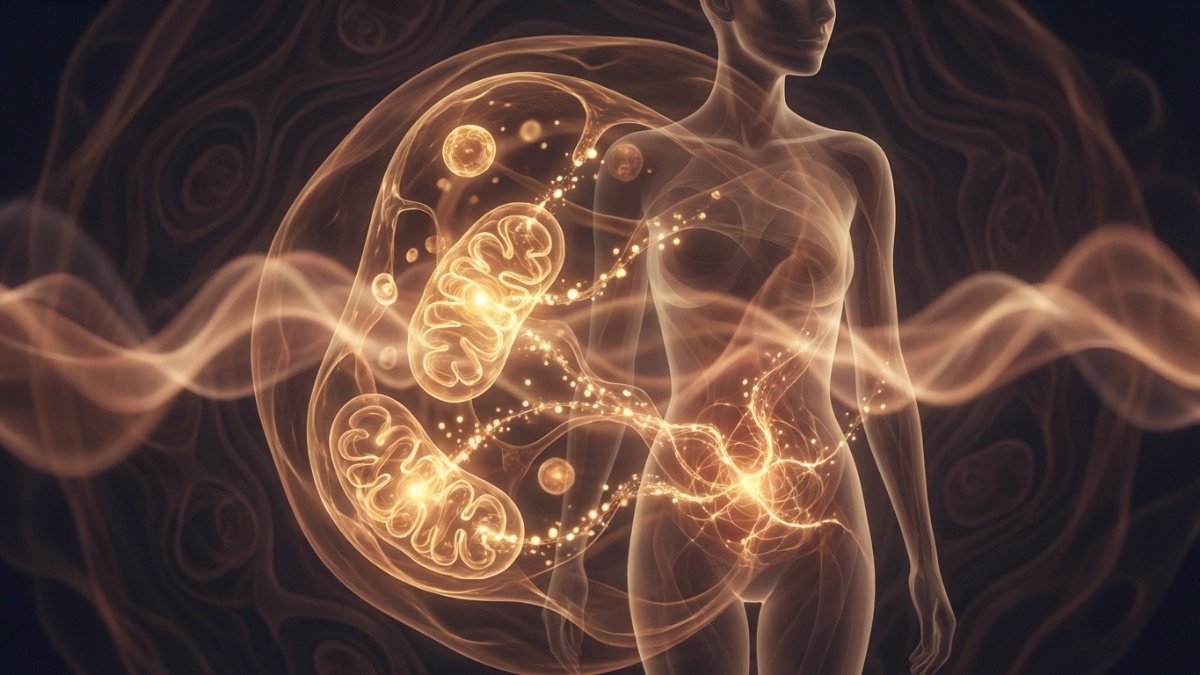
Mitochondria are small structures found in nearly every cell in the body. Their primary job is to convert nutrients into energy in the form of ATP, the molecule cells use as fuel. In the liver, mitochondria play a particularly important role because this is where fatty acids are broken down through a process called beta-oxidation.
Mitochondria are not static. They constantly change shape by dividing (fission) or merging together (fusion). Think of it like a factory that can split into many small units or consolidate into larger, more efficient production lines. Under normal conditions, there is a balance between division and merging. But when the body is subjected to prolonged fat overload, the balance tips. Mitochondria divide too much and become small, fragmented, and inefficient. It is like a factory split into so many small pieces that none of them can produce properly.
What the Research Shows
In experiments with mice, one group was placed on a high-fat diet for 12 weeks to induce fatty liver. The mice were then switched to a ketogenic diet for 2 weeks. The results were striking. Mice on the ketogenic diet lost significant weight and their liver weight decreased. Blood sugar regulation improved and insulin sensitivity was enhanced.
When researchers examined the liver cells, they found a clear reduction in fat accumulation. Triglyceride levels, the type of fat stored in the liver, dropped significantly. The inflammation markers IL-1β, TNFα, and IL-6 were all elevated in the fatty liver mice but fell after the ketogenic diet. The liver NAS score, a measure of disease severity, also improved.
How keto reverses fatty liver, at the mitochondrial level
· Fat accumulates in liver cells
· Less fat burning
· Elevated oxidative stress
· Inflammation rises
· Fat is burned instead of stored
· Less mitochondrial fission (increased fusion shown only in cell studies)
· Lower oxidative stress
· Inflammation falls
Keto Restores Mitochondrial Balance
The most compelling finding concerned the mitochondria. In mice with fatty liver, liver mitochondria had become abnormally small and fragmented. This was caused by overproduction of two proteins, Fis1 and Drp1, which drive mitochondrial division. Think of them as molecular scissors that cut mitochondria into smaller pieces.
After just 2 weeks on a ketogenic diet, the levels of these division proteins dropped significantly. Mitochondria regained their normal size and shape, meaning they could once again function effectively as fat-burning engines.
This improved mitochondrial balance translated directly into better function. ATP production in the liver increased, and key genes for fatty acid burning (beta-oxidation) such as Cpt1a and Ppara were upregulated, while other genes in the same pathway were only partially restored. In other words, mitochondria went from being overloaded and fragmented to functioning as efficient energy factories once again.
Ketone Bodies Are the Key
To pinpoint exactly what in the ketogenic diet protected the mitochondria, researchers examined beta-hydroxybutyrate (BHB), the most abundant ketone body in the blood. BHB accounts for approximately 78 percent of all circulating ketone bodies during ketosis.
In cell experiments using human liver cells (HepG2), the cells were exposed to palmitic acid, a saturated fatty acid that simulates fat overload. Palmitic acid caused mitochondria to fragment, mirroring what was seen in the mice. But when BHB was added, the picture reversed. Mitochondria began merging again and regained their branched, healthy structure. Fat accumulation in the cells decreased simultaneously.
The decisive evidence came when researchers added a mitochondrial fusion inhibitor (MFI8). When fusion was blocked, BHB's protective effect on fat accumulation disappeared. This confirms that BHB reduces liver fat specifically by restoring mitochondria's ability to merge and function optimally.
What Does This Mean in Practice?
This research underscores that the ketogenic diet is not just about weight loss. Ketone bodies, particularly BHB, appear to protect liver cells at a fundamental level by restoring balance in mitochondrial dynamics. When mitochondria function better, the liver burns fat more efficiently, produces more energy, and maintains lower inflammation levels.
For people with fatty liver or early signs of it, the findings suggest that even short periods on a ketogenic diet can have a measurable positive effect on liver health. If you take insulin, a sulfonylurea, or an SGLT2 inhibitor, your doctor needs to adjust your medication before you start. The source cites three small clinical studies: a 4-week study in 27 patients with obesity found liver volume fell by 19.8 percent, a 2-week study in 17 patients with obesity and fatty liver showed a significant reduction in liver fat measured by MR spectroscopy, and an 8-week study in 33 patients with obesity improved fatty liver index, ALT, blood sugar, and blood lipids. These results support the idea that keto works not just in animal studies, but also in humans. Combined with regular exercise and a thoughtful approach to fat quality, emphasizing unsaturated fatty acids, the ketogenic diet can be a powerful tool for protecting and restoring liver function.
Who Is This For?
Research on keto and fatty liver is particularly relevant for:
- People with non-alcoholic fatty liver disease (NAFLD/MASLD): Keto and carbohydrate reduction are among the most effective interventions, liver enzymes (ALT, AST) and liver fat (FibroScan, MRI) should be monitored.
- People with metabolic syndrome and insulin resistance: The drivers of fatty liver are identical; keto addresses the root.
- People with type 2 diabetes: There is substantial overlap between fatty liver and diabetes, and keto can improve both. But insulin and sulfonylureas (such as glimepiride or glipizide) need dose adjustment by your doctor to avoid low blood sugar, and SGLT2 inhibitors (such as empagliflozin or dapagliflozin) are normally paused before keto because of the risk of ketoacidosis at normal blood sugar. People with type 1 diabetes should only try keto under close medical supervision.
- People with advanced liver disease (cirrhosis, liver failure): Keto is not self-treatment, requires hepatologist evaluation due to impaired ketone production and protein turnover.
- People with pancreatitis or gallstones: High fat intake can worsen the condition, moderate the fat amount.
- People on methotrexate or other hepatotoxic medication: Discuss dietary changes with a doctor to avoid combination injury.
- People with high alcohol consumption: Address alcohol first; without that, dietary intervention is limited in effect.
- Pregnant and breastfeeding women: Keto is discouraged without specialist guidance.
- Children and adolescents: Keto should not be used without guidance from a pediatrician or specialist.
- People with a past or current eating disorder: Strict dietary restriction can trigger relapse and is not recommended without close follow-up.
For healthy adults with early or moderate fatty liver, a well-planned ketogenic diet (or broader low-carb diet) is an evidence-based intervention. Measure baseline ALT, AST, GGT and possibly FibroScan, and follow up after 12 weeks.
Related Reading
Fatty liver and keto connect directly to the body's fat synthesis regulation:
- De Novo Lipogenesis: How Exercise, Keto and Fasting Slow Down Your Body's Fat Production, the molecular mechanism that drives fat storage in the liver.
- The Metabolic Switch: How Your Body Shifts from Glucose to Ketones During Fasting, the biochemical context in which ketone bodies restore mitochondria.