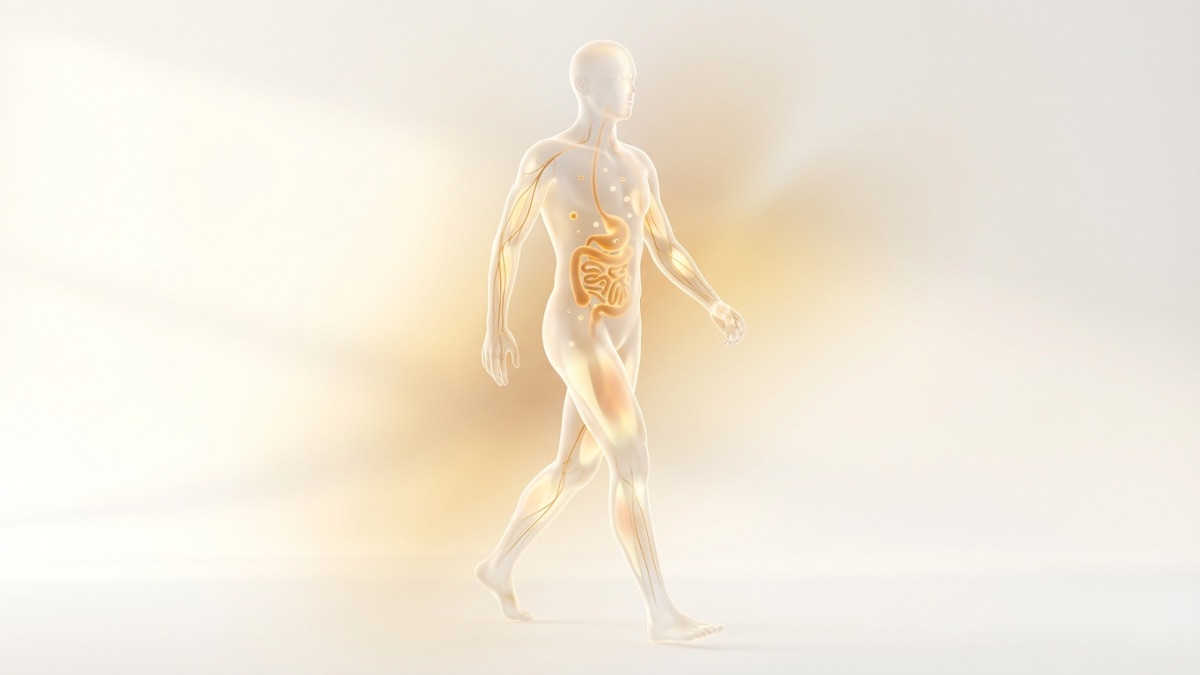
A single map of what fasting does to the body
Research on intermittent fasting and on slightly longer fasts (typically 48 to 72 hours) has grown enormously. Hundreds of studies have looked at everything from blood sugar and inflammation to the cells' clear-out and brain health. But precisely because the research is so scattered, it can be hard to form an overall picture. A large review has tried to pull the threads together and show what happens in the body while you fast, hour by hour.
In short: Fasting is not one big switch, but a chain of phases that follow one after another. After some hours without food, the body begins to change fuel from sugar to fat. According to the review, the cells' clear-out begins at 16 hours, but this has not been shown in humans. And after 48 to 72 hours, deeper processes in the brain and immune system kick in. Think of it as a train that stops at several stations along the way.
The fasting timeline: when does what happen in the body?
| Time | What happens |
|---|---|
| 0 hours | Last meal. Blood sugar settles down calmly. |
| From about 12 hours | The liver's sugar store is running low, and the shift to burning fat picks up. The store is typically used up within the first or second day. |
| 16 hours | According to the review, the cells' own clear-out (autophagy) begins, where worn-out parts are reused. |
| 24 hours | The signs of hidden inflammation in the body begin to fall. |
| 72 hours | According to the review, the clear-out is at its peak. BDNF, a substance that works like fertilizer for brain cells, may rise. |
From sugar to fat: the body changes fuel
The most basic effect of fasting is that the body changes fuel. When no food comes in, it gradually moves from using sugar as its main fuel to burning fat and making ketone bodies. This begins when the liver's sugar store is running low. The review does not put an exact number of hours on it, but according to Anton and colleagues (Obesity, 2018), the switch typically happens 12 to 36 hours after the last meal, depending on how full the store was and how active you are. The ketone body BHB is not just an alternative fuel. It also acts as a message to the cells that turns down inflammation and starts up maintenance and repair.
Does the cells' clear-out follow a clock?
The review offers an estimate of when the cells' own clear-out (autophagy) starts during a fast. This is the process where cells pack up their worn-out parts, break them down and reuse the building blocks. It begins after about 16 hours and rises gradually to its peak around 72 hours. These times rest on animal studies and on indirect measurements in humans, though, and it has not yet been shown whether or when the clear-out actually rises when a person fasts. So the numbers cannot be used as a schedule for your own fast.
BDNF and brain health
One of the more exciting findings is about the brain. BDNF is a substance that works like fertilizer for brain cells and helps them survive and form new connections. In animal studies, it may rise after fasts longer than 60 hours. Low BDNF is linked to depression and failing memory, so it is a good thing that it rises. The researchers see it as part of the body's survival response: when food is scarce, the body sharpens the brain so we have a better chance of finding something to eat.
Inflammation falls after a day
A low, ongoing inflammation in the body is linked to many lifestyle diseases, from type 2 diabetes and heart disease to certain cancers and Alzheimer's. The review shows that measurable changes in inflammatory markers can be detected from about 24 hours of fasting, and that the levels fall more clearly the longer the fast lasts. Part of the explanation is that the body's energy sensor (called AMPK) switches on when energy is short and turns down the genes that otherwise start the inflammation. The ketone body BHB helps in the same direction.
Better blood-sugar control
The review confirms that intermittent fasting improves how the body responds to insulin, a finding that comes up across many studies. During a fast, insulin falls, and the cells gradually become more responsive to it. When you eat again, they react more efficiently, and less insulin is needed to keep blood sugar steady. This is especially important for people with insulin resistance, metabolic syndrome or prediabetes. For healthy people, it gives steadier energy and better fat burning. If you take insulin or other blood-sugar-lowering medication, your doses need to be adjusted with your doctor before you fast.
Different ways, different effects
The review distinguishes between ordinary intermittent fasting and slightly longer fasts of 48 to 72 hours. They overlap, but are not the same. The daily forms (16:8, 5:2, fasting every other day) are especially good at improving insulin, calming inflammation and helping with weight. The longer fasts of 48 to 72 hours set off deeper processes, such as more clear-out in the cells (shown in animal studies), higher BDNF and stronger ketosis.
But longer fasts also carry bigger risks, including loss of muscle, disturbances in the body's salts, blood sugar going too low, and worsening of any eating disorder. Longer fasts should therefore only be done under the guidance of a professional.
What to keep in mind
The review is a so-called narrative review. That means the authors chose which studies to include themselves, without the systematic, strict method that a pooled analysis uses. Several of the times (clear-out after 16 hours, BDNF after about 60 hours) rest on animal studies or indirect measurements and cannot simply be transferred directly to humans. On top of that, people respond very differently to fasting depending on sex, age, weight and genes. The review paints a general picture, but your own experience can differ quite a bit.
The overall picture
Despite the limitations, the review gives a useful overview. Ciastek and colleagues from the University of Opole published it in the journal Nutrients in 2025. The core message is that fasting sets off a whole chain of helpful processes, from a change of fuel and better insulin to a clear-out in the cells (so far shown only in animal studies), less inflammation and protection of the brain, which together can strengthen metabolism and perhaps help prevent chronic diseases.
But it is no miracle cure. Fasting is a tool that has to be fitted to your situation, your health and your daily life, and as always it should go hand in hand with good food, movement and enough sleep.
Who is this for?
Most people can use intermittent fasting and shorter fasts, but not everyone. Pay particular attention if you:
- Have diabetes: fasting can lower blood sugar too much, especially if you take insulin or a sulfonylurea (for example glimepiride or glipizide), and your doctor needs to adjust the doses beforehand. If you take an SGLT2 inhibitor (for example empagliflozin or dapagliflozin), talk to your doctor before fasting, because the combination can trigger ketoacidosis at normal blood sugar. If you have type 1 diabetes or are on insulin therapy, the review advises against longer fasts (beyond 24 hours) altogether.
- Have or have had an eating disorder: fasting can reawaken old patterns of restricting or bingeing. Seek help from a professional.
- Are pregnant or breastfeeding: long fasting periods are not advised, because the need for energy and nutrients is higher.
- Are under 18: the body and brain are growing, so fasting beyond 12 to 14 hours is unsuitable.
- Are over 75 or have active cancer: the review advises against longer fasts (beyond 24 hours) in both groups. Talk to your doctor or oncology team first.
- Weigh too little: there is a risk of losing muscle. Stick to short windows of about 12 hours.
- Work shifts: your body clock is already under strain. Keep the fasting window as steady as possible within your shift.
- Take medication that has to be taken with food: agree the timing with your doctor or pharmacist.
- Train a lot: place the fasting window so it does not wreck your training.
For healthy adults, mild forms of fasting (12 to 16 hours) are usually safe. Start gradually, drink water and get salts, and stop if you feel dizzy, get palpitations or notice marked fatigue.
Related Reading
To go deeper into the mechanisms:
- How your body switches from sugar to ketones when you fast explains the basic mechanism behind most of the benefits of fasting.
- Fasting reshapes your hunger and fullness hormones covers why fasting often gets easier over time.