Autophagy: The Body's Cellular Self-Cleaning
Inside every single cell in your body, a constant cleaning process takes place. Damaged proteins, worn-out cellular organelles, and potentially harmful waste products are identified, enclosed in membrane vesicles, and transported to the cell's recycling station, the lysosomes, where they are broken down and reused. This process is called autophagy (from Greek: "to eat oneself"), and it is one of the body's most fundamental maintenance mechanisms.
In 2025, Wolska and colleagues published a narrative review in International Journal of Molecular Sciences compiling existing knowledge on how intermittent fasting activates autophagy and what role this activation may play in cancer. The topic is complex, and the results are anything but simple.
In short: In cell and animal studies, fasting activates autophagy (cellular cleanup) via mTOR↓ and AMPK↑. In humans, this has not yet been shown. Autophagy is protective BEFORE a cancer cell forms, it removes damaged cells. But once a tumor is established, autophagy can in some cases help cancer cells survive. Fasting against cancer is therefore not clear-cut, it depends on tumor type and treatment context.
How Is Autophagy Activated During Fasting?
Autophagy is primarily regulated by two opposing signaling pathways in the cell. One is mTORC1 (mechanistic target of rapamycin complex 1), a protein complex that functions as the cell's "growth center." When there is abundant nutrition, amino acids, and insulin, mTORC1 is active and suppresses autophagy. The cell focuses on growing and dividing.
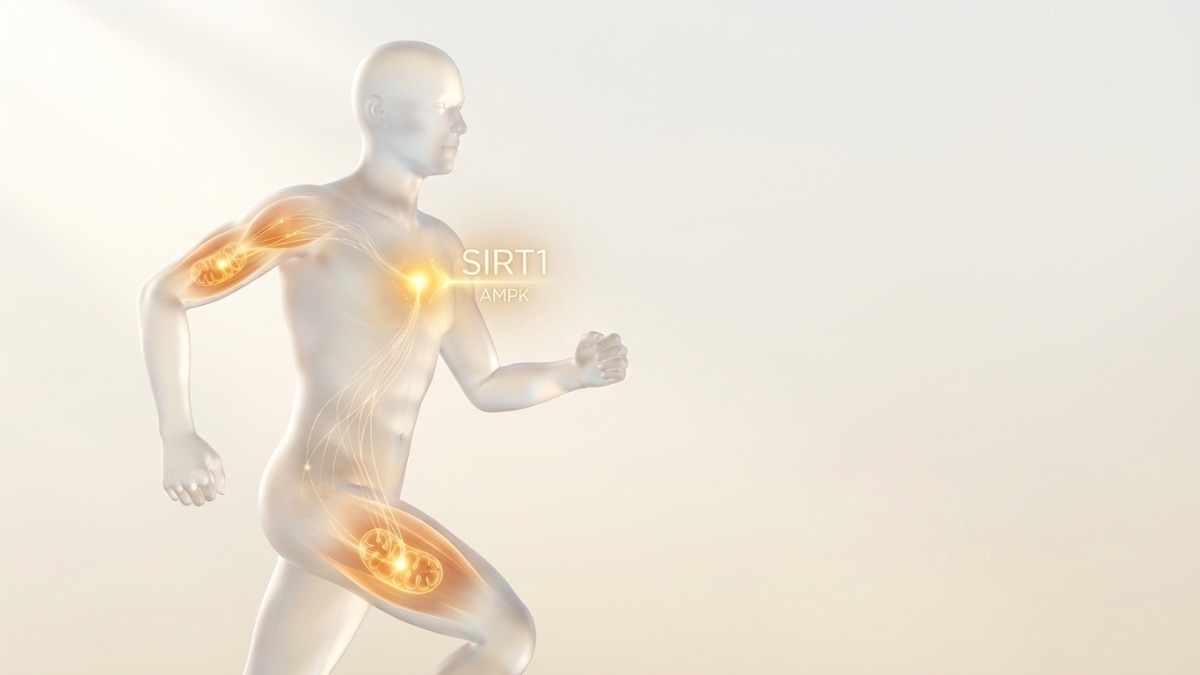
The other is AMPK (adenosine monophosphate-activated protein kinase), the cell's "energy sensor." When energy levels drop (as during fasting), AMPK activates. AMPK inhibits mTORC1 and simultaneously activates ULK1 (Unc-51-like kinase 1), which directly initiates the autophagy process. Think of it as a seesaw mechanism: When nutrition is present, it tilts toward growth (mTORC1). When nutrition is absent, it tilts toward cleanup (AMPK → ULK1 → autophagy).
Timeline: When Does Autophagy Start?
The review provides an overview of when different forms of autophagy activate. Short fasts (16-24 hours) primarily activate macroautophagy, the most studied form, where entire cellular organelles and protein aggregates are enclosed and degraded. This is based on cell and animal studies, and according to a more recent 2026 review, in mice it shows most clearly in the liver and skeletal muscle, while findings in the brain are mixed. In humans, it has not been shown whether or when autophagy rises during a fast.
In cell and animal studies, longer fasts (over 48 hours) activate additional forms: Chaperone-mediated autophagy (CMA), where specific proteins are transported directly to lysosomes via helper proteins, and mitophagy, the targeted degradation of damaged mitochondria (the cell's energy-producing organelles). Mitophagy is particularly relevant for cancer research because dysfunctional mitochondria can contribute to the uncontrolled cell growth that characterizes cancer.
The autophagy paradox: why does it cut both ways?
Effect: Protects against cancer formation.
Effect: Can in some cases help the tumor.
Autophagy and Cancer: A Double-Edged Sword
Here is where it gets complex. Autophagy has a paradoxical role in cancer that depends on the disease stage:
Before cancer develops, autophagy functions as a protective mechanism. By removing damaged cellular components, reducing oxidative stress, and maintaining genomic stability (DNA integrity), autophagy helps prevent normal cells from undergoing the mutations that can lead to cancer. Animal experiments show that mice with reduced autophagy capacity have higher tumor incidence.
When cancer is already established, autophagy can paradoxically help tumor cells survive. Cancer cells grow rapidly and often exist in hostile environments with oxygen deprivation and limited nutrition. Under these conditions, autophagy can help cancer cells recycle their own components to maintain energy production, and thereby survive. Additionally, autophagy can protect cancer cells from the damaging effects of chemotherapy.
This duality makes it difficult to give a simple answer about whether fasting-induced autophagy is "good" or "bad" regarding cancer. The answer depends on the context.
Intermittent Fasting and Cancer Treatment: Preclinical Evidence
The review examines preclinical studies (cell and animal experiments) that have investigated intermittent fasting in combination with cancer treatment. Results are generally promising in the laboratory:
Fasting appears to make normal cells more resistant to chemotherapy while cancer cells remain vulnerable. The effect was described by Raffaghello and colleagues in PNAS in 2008 under the name "differential stress resistance", and the review cites that work. This is because normal cells can activate protective stress responses during fasting, while cancer cells, dependent on constant nutrition and growth signals, cannot.
Additionally, fasting can reduce levels of insulin and IGF-1 (insulin-like growth factor 1), which are growth factors that promote tumor growth. By lowering these signals, fasting can potentially slow tumor progression.
From Laboratory to Reality: The Major Gaps
It is crucial to emphasize that the majority of existing evidence comes from cell and animal experiments. Human data is very limited. The few clinical studies that have been conducted have typically been small, short-term, and without adequate controls. There are no large, randomized controlled trials showing that intermittent fasting improves cancer treatment outcomes in humans.
The safety aspect is also important. Cancer patients are often in states of compromised nutrition, muscle wasting, and metabolic stress. For these patients, fasting periods could potentially worsen nutritional status and undermine the body's ability to fight the disease. Any form of fasting during cancer treatment should only occur under medical supervision.
Different Forms of Intermittent Fasting and Cancer
The review lists the most common forms: 16:8, the gentler 14:10, 5:2, where you eat about a quarter of your daily energy needs on two days a week, and Eat-Stop-Eat, a complete fast of 24-48 hours. It does not rank them by how much autophagy they produce, and in humans none of them has been clearly shown to increase autophagy. Prolonged fasting also carries the greatest risk of side effects.
None of the protocols have sufficient clinical evidence to be recommended as supplements to cancer treatment. But the preclinical data is interesting enough to justify further research.
Limitations and Caveats
This review article has several important limitations. It is primarily based on preclinical studies, and the promising results from laboratory experiments cannot automatically be transferred to humans. Cancer is a heterogeneous disease, what applies to one cancer type does not necessarily apply to another. The review does not include a systematic search strategy or formal quality assessment of the studies, which limits the strength of the conclusions.
For healthy people interested in autophagy as a general health tool, the mechanism behind intermittent fasting is well described in cell and animal studies, but it has not yet been shown that fasting increases cellular cleanup in humans. For cancer patients, the picture is far more complicated, and self-treatment with fasting should be discouraged without medical guidance.
Who Is This For?
Research on intermittent fasting, autophagy and cancer is predominantly preclinical. It is clinical research, not self-treatment. Be particularly attentive if you:
- Are in active oncological treatment: Fasting or fasting-mimicking diet (FMD) must only happen in consultation with an oncologist. Certain chemotherapy regimens combined with fasting show promising effects, but individual evaluation is essential. Update, November 2026: A meta-analysis of six small trials found no clear difference in side effects, blood counts or quality of life, so the effect remains unsettled.
- Are in cancer survivorship: Lifestyle changes (diet, exercise, weight loss in overweight) reduce recurrence risk, discuss moderate IF with oncologist.
- Have cachexia (cancer-related muscle and weight loss): Not recommended, additional energy deficit worsens prognosis.
- Have low BMI or undernutrition: Fasting is discouraged; focus on protein and calorie intake.
- Are undergoing radiation therapy: Hydration and energy intake are central, fasting is discouraged without oncologist collaboration.
- Are on diabetes or blood pressure medication: Combined with cancer treatment, fasting can produce dangerous interactions, in particular a risk of hypoglycemia (low blood sugar) on insulin or sulfonylureas and of low blood pressure on blood-pressure medication.
- Family and friends: Do not pressure patients to fast, it must be an informed decision.
For healthy adults without cancer, intermittent fasting can be part of a preventive lifestyle, but no interventions can eliminate cancer risk. Movement, avoiding tobacco and excessive alcohol, healthy weight, normal vitamin D levels and regular screening remain the most evidence-based strategies.
Related Reading
Fasting, autophagy and cancer biology have several overlaps:
- Fasting as Cancer Treatment: Myth or Breakthrough in Oncology?, the clinical context where the autophagy mechanism is applied therapeutically.
- Prolonged Fasting and Immune System Regeneration, the parallel stem cell-based regeneration mechanism.
Source: Wolska W, Gutowska I, Wszołek A, Żwierełło W. "The Role of Intermittent Fasting in the Activation of Autophagy Processes in the Context of Cancer Diseases." International Journal of Molecular Sciences, 2025;26:4742. DOI: 10.3390/ijms26104742