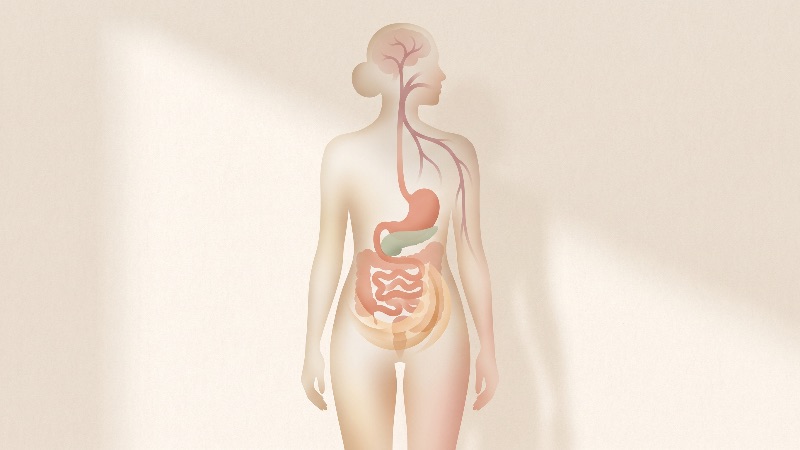
Most people think about what they eat, but rarely about the order. Yet research shows that the sequence in which you eat your foods can change both your blood sugar and the release of your own satiety hormone, GLP-1, even when the meal is exactly the same.
In 2019, Sun and colleagues published a randomised crossover study called PATTERN in the journal Clinical Nutrition, putting food order to the test.
The question the researchers asked: Does the order, that is, whether you eat vegetables, protein or carbohydrate first, affect blood sugar, insulin and the gut hormone GLP-1 in healthy adults?
How they investigated it: Sixteen healthy Chinese adults were given the same Asian-style meal, made up of vegetables, chicken and white rice with identical calories, but eaten in five different orders. The researchers measured blood sugar, insulin, GLP-1 and a related gut hormone (GIP) continuously over three hours after each meal.
What they found: Every order in which rice did not come first gave a lower blood-sugar rise. But only when vegetables, meat and rice were eaten as three separate courses in that order was GLP-1 release higher than in every other sequence, without the body needing more insulin. When the rice was eaten first, blood sugar rose the most.
In short: Same food, different order, different result. Eating vegetables and protein before the carbohydrates boosts your own GLP-1 and keeps blood sugar down. This article explains why it works and how to use it in practice.
What is GLP-1, and why is it interesting?
GLP-1 (glucagon-like peptide-1) is a hormone the gut releases when you eat. It does three things at once: it signals fullness to the brain, it slows down stomach emptying so food is digested more slowly, and it helps the body release insulin exactly when it is needed. This is the very same system that medications like Ozempic (semaglutide) mimic, only at far higher doses. If you can strengthen your body's own GLP-1 through food, you get a mild version of the same effect entirely naturally.
The order that works: vegetables and protein before carbohydrate
The core of the PATTERN study is simple: save the carbohydrates for last. When vegetables and protein are eaten before the starch, the rise in blood sugar is blunted and the GLP-1 response is stronger.
Why does it work?
When protein and vegetables reach the gut first, they trigger a stronger release of GLP-1 from the gut's cells. GLP-1 slows stomach emptying, so the carbohydrates that follow are absorbed more slowly and evenly. The result is a flatter blood-sugar curve and a longer feeling of fullness.
What about fibre?
A 2020 review by Kubota and colleagues in Nutrients adds nuance. Protein and fat before carbohydrate are what mainly drive GLP-1 up. Fibre before carbohydrate also lowers blood sugar, but does not raise GLP-1 to the same degree. The two strategies appear to complement each other, though: eating both fibre-rich vegetables and protein before the starch gives you both the fibre-braking effect and the stronger GLP-1 response. The review also notes, though, that meat rich in saturated fat before carbohydrate raises GIP at the same time, a hormone that promotes fat storage, so the benefit has a counterweight.
How to use it in practice
The beauty of this approach is that it does not require you to change what you eat, only the order. A simple rule of thumb:
- Start with the vegetables: salad, broccoli, beans or other vegetables first.
- Then protein and fat: meat, fish, eggs or cheese as the second course.
- Save the carbohydrates for last: rice, potatoes, bread or pasta at the end, if they are part of the meal.
The approach works best with ordinary mixed meals where there actually are carbohydrates to account for. If you already eat low-carb or keto, the blood-sugar spike is small to begin with, but the principle can still offer an added fullness benefit. If you take insulin or a sulfonylurea, agree the change with your doctor first.
Who is this relevant for?
Meal sequence is a simple tool without side effects for most people, and especially interesting for those with type 2 diabetes, prediabetes or ordinary post-meal blood-sugar swings. It is not a replacement for medication or for a generally healthy diet, but a small, free tool on top. If you take insulin or a sulfonylurea (such as glimepiride), a lower and slower blood-sugar rise can mean your medication acts more strongly than usual relative to the meal. Talk to your doctor about timing and dose before you change the order permanently. If you are on other medication for your blood sugar, the change should also be made together with your doctor.
Related reading
If you want to build on this, these are closely connected to the topic:
- Type 2 diabetes and prediabetes: how to lower blood sugar and your need for medication, the broad guide to blood-sugar control.
- Fasting reshapes your hunger hormones, more on the hormones behind appetite.
- Meal timing and metabolism, when in the day you eat matters too.
- GLP-1 and diet: how to stimulate your body's own satiety hormone, the broad guide to GLP-1 and the natural strategies.