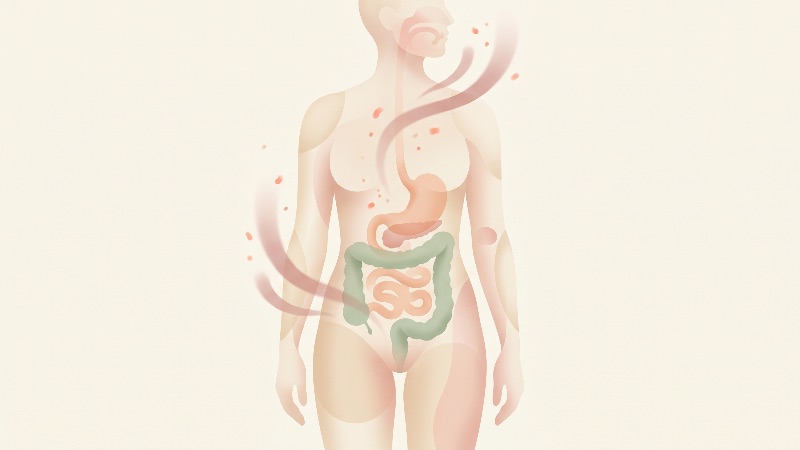
We tend to think of fibre as something that just passes through the body without doing much. But fibre actually does something far more remarkable: it is the key that makes the body release its own satiety hormone, GLP-1.
In 2024, Angelini and colleagues published a review in the journal Peptides that gathered the research on how gut bacteria affect the body's own incretin hormones, including GLP-1.
The question the researchers asked: How do gut bacteria affect the body's release of GLP-1, and what does that mean for appetite and weight?
How they investigated it: The researchers reviewed the combined research across animal and human studies on the interplay between diet, gut flora and the gut's hormone-producing cells.
What they found: The gut bacteria's metabolites, especially the short-chain fatty acids formed when the bacteria ferment fibre, directly stimulate the gut's L-cells to release GLP-1. This dampens appetite and food intake.
In short: Fibre is not just filler. It is the raw material the gut bacteria use to make the body form its own GLP-1. This article explains how fibre travels all the way down to the bacteria, and how to get the most out of it.
What is GLP-1?
GLP-1 is a hormone the gut's so-called L-cells release when you eat. According to Holst's review of the hormone's physiology, it does several things: it signals fullness to the brain, slows down stomach emptying so food is digested more slowly, and helps the body release insulin when blood sugar rises. It is the same receptor system that medications like Ozempic activate, but the drug is built to stay on the receptor far longer than the body's own GLP-1 does, which is broken down extremely rapidly. If you can strengthen your own GLP-1 through food, you are working with the same system, but your body's own signal is far weaker and short-lived compared with the sustained receptor activation that medications like Ozempic provide. If you take GLP-1 medication, increase fiber gradually; the two amplify each other's stomach side effects.
Fibre's journey: the package that reaches all the way down
To understand why fibre works, you need to know how plant cells are built. Plant cells are surrounded by a firm cell wall that the body's own digestive enzymes cannot fully break down in the upper part of the gut. The cell wall acts like a kind of package that protects the nutrients inside and carries them further down the digestive system than processed food reaches. This is documented in the research on food structure and the plant cell matrix.
Down in the large intestine live the vast majority of your gut bacteria. When the fibre-rich packages finally reach them, it is the bacteria's turn to get to work.
The gut bacteria and short-chain fatty acids
When the gut bacteria ferment fibre, they form short-chain fatty acids, including acetate, propionate and butyrate. According to the research on these fatty acids, they bind to specific receptors on the gut's L-cells and set off the release of GLP-1. In other words: you feed the bacteria fibre, and in return they make the body form more of its own satiety hormone. It is a genuine partnership between you and the trillions of microbes you carry.
Which foods work best?
The rule is simple: the more fibre-rich and the less processed, the better. The best sources are plants where the cell walls are still intact:
- Vegetables, especially cabbage: broccoli, cauliflower, kale and white cabbage are full of fibre and reach far down the gut.
- Legumes: lentils, chickpeas and beans, if you tolerate them, are among the most fibre-rich foods.
- Nuts and seeds: whole, unprocessed nuts keep their structure.
- Berries and above-ground vegetables: fibre-rich and low in carbohydrates.
Why ultra-processed food blunts the effect
When food is milled, refined and heavily processed, the plant cells' walls are broken down in advance. The nutrients are then released high up in the gut and absorbed quickly, long before they reach the bacteria. The result is that very little arrives at the place where GLP-1 is formed. Ultra-processed food, in effect, bypasses the body's own satiety mechanism.
Who is this relevant for?
Eating more fibre-rich and less processed food is healthy for most people and one of the simplest ways to strengthen the body's own appetite regulation. It is especially interesting if you struggle with sugar cravings, constant hunger, or want to maintain a healthy weight. It is not a replacement for weight-loss medication if your doctor has prescribed it, but a natural foundation that works in the same direction. If you are on GLP-1 medication such as Ozempic or Wegovy, a sudden high fiber intake can worsen side effects like nausea and bloating, so increase fiber gradually and talk to your doctor. If you increase your fibre intake, do it gradually and drink plenty of water so your gut can adjust.
Related reading
This article is closely connected to these:
- Meal sequence and GLP-1, how the order you eat in also boosts your satiety hormone.
- The gut microbiome as the missing link between keto and health, more on your gut bacteria's role.
- Type 2 diabetes and prediabetes, the broad guide to blood-sugar control.
- GLP-1 and diet: how to stimulate your body's own satiety hormone, the broad guide to GLP-1 and the natural strategies.